Saturday, January 5, 2019

Adventures with the 'Duke of the Bahamas'!


     On January 1, four days before the end of our trip and following thrilling Junkanoo experiences, my group sought respite at the relaxing and beautiful Cable Beach.  This beach is located near the Melia resort, relatively central to the island.  Interestingly enough, it gets its name from the large wires and cables which were originally built there, allowing the island to gain contact and telecommunication with other areas.  To access the beach, we traveled via the public bus, per the recommendation of our tour guide, to avoid paying expensive fees for a taxi.  We embarked on our journey shortly after breakfast, around noon. 

     After boarding the bus, we shortly realized that this means did not appear to be frequented by tourists, but rather locals who knew the system.  Unsure of where to sit, when to pay, how much, and when to get off, we were very lucky to encounter a kind gentleman who deemed himself the “Duke of the Bahamas.”  We asked us where we were headed and not only told us when to get off but was heading there himself and walked us directly to an area where we could set up and enjoy the beach.  He appeared to be selling souvenir t-shirts to those on the beach.

    Once we arrived, there was an area to purchase a variety of affordable foods, there was a clean bathroom and changing area, clean sands, and even beach chairs.  However, the catch was that we appeared to be in some sort of resort area, seemingly with a variety of timeshares, with an adjoining private beach for those specific residents.  Had we not arrived with the “duke,” it is likely we would have been turned away from the property. 

    Despite the clear blue waters, availability of water sport activities, free Wi-Fi from Melia resort, and beautiful beach area, this experience was hindered by the knowledge that we were likely interloping on a private area and were enjoying amenities which we should not have.  The monopoly by private resort areas of Cable beach however, is an inherent weakness of the beach and a critique which others who have reviewed the beach online also had.  There were potentially other more public areas, but similar to the lack of information present when attempting to navigate the bussing system, directions to such an area were nowhere to be found. 

    The interaction we had with this helpful man who led us to the beach stood out not only because it was our only means of locating our destination, but because it demonstrated a willingness to assist and to go above and beyond which we did not always encounter.  Although we thoroughly enjoyed our trip to Cable Beach, it helped to emphasize the limitations placed by private resorts, lack of information, and a lack of care involved with a service received, which in turn limit the destination and its associated attractions. 


Ichiban Restaurant

A short walk from our hotel, our small group ventured over to Ichiban for one of our project experiences. To sum it up, we did have to wait for a few minutes for a table and then service was fairly slow for both drink and food orders, though we were warned of a backup in the kitchen. Thankfully, we were the last group to be seated before they started a wait.

On average, it took us about 15 minutes for our waters to arrive and about 45 minutes for food to arrive after we placed our orders. While this wasn’t necessarily fast service as we would expect it back home, it didn’t seem to be an unreasonable amount of time as we were able to easily fill it with good conversation.

All of our orders came out correct, though we did have to wait about an additional 20 minutes for our last appetizer to arrive which came just as we finished the other appetizers.

Overall, this was a fairly positive experience as we weren’t distracted much by the poor service and slow times because the quality of the food was excellent and we able to converse which easily passed the time. 

To improve the service, I would recommend the restaurant train wait staff to encourage them to keep checking on tables that have been waiting for a long time. Having open communication about the status of their meals and drinks would help ease feelings of being forgotten or being neglected. 

This is something we witnessed as one table seemed very annoyed trying to get a waiters attention after sitting without food or drink for a very long time. Another table had to consistently pull waiters over to see where their drinks were or ask for water refills.

Having the wait staff engage with the customers should help alleviate these problems so they won’t be left in the dark waiting for their orders.


Something else I would recommend they do to improve their service would be to have a manager present and walking around when the restaurant is busy. With a senior level person walking around interacting with customers, they will see that they are cared about and not forgotten. Being a person with authority, the manager would hopefully be able to ease concerns with the customers to enhance their experience despite having to wait longer than usual.

Restaurant Experiences in Nassau


     Dining out in Nassau is an experience, to say the least. Over the past ten days, I have had the opportunity to try a wide range of restaurants here in the Bahamas, and I have found that they all have one thing in common: poor service. Even though I have been able to enjoy my restaurant experiences due to the company of my friends, the lack of service and hospitality did not add to my experience.
     My first encounter with this trend was when my group and I ventured out west to try La Caverna, a local Italian hot spot. The rave online reviews gave me and my friends hope that we would be in for a treat, however, once we arrived we were tremendously let down. When we entered the restaurant, no one acknowledged us and after waiting several minutes we had to sit ourselves. The owner, who doubled as the waiter, continuously checked-in on the few other tables, yet never came by to offer water nor menus. Once we waited 15 minutes, he finally acknowledged our presence, but did not apologize for the abnormally long wait time. The food, on the other hand, was not as bad as I thought it would be, yet it still did not make up for the lack of hospitality. By the time my friends and I left the restaurant, we were fuming from our evening at La Caverna, and could only hope that the rest of our restaurant experiences would not be as disappointing.
     The following evening, we crossed the bridge to Paradise Island to try Viola’s Bar and Grill. We were shocked, once again, to see no hostess anywhere and had to approach a waiter to remind him of our reservation. It took us nearly 10 minutes to be greeted by our waitress and another 15 minutes for us to receive our drinks. The expression, “island time,” is certainly an understatement here. Once we received our food, our spirits were raised and we were able to enjoy the authentic Caribbean atmosphere and music of Viola’s Bar and Grill.
     The last restaurant experience my friends and I had was at Lukka Kairi, a relaxing beach inspired restaurant. It was situated on the main street of downtown Nassau and had a great view of passerby cruise tourists. Unlike the other restaurants we experienced, Lukka Kairi had a designated host and we were shown to our table immediately. Our waitress was unbelievably punctual, and brought us our water in just 2 minutes. The food did not disappoint either, the local conch sliders were phenomenal and the salads was equally stupendous. While our waitress failed to do a quality check and never refilled our water, it was still the best service we had in the Bahamas. Overall, dining out in Nassau is not a quick and painless experience. They certainly take “island time,” to heart here, so if you enjoy a casual 4 hour meal… this is your place to be.

My Unbe-weave-able Experience at Nassau's Straw Market


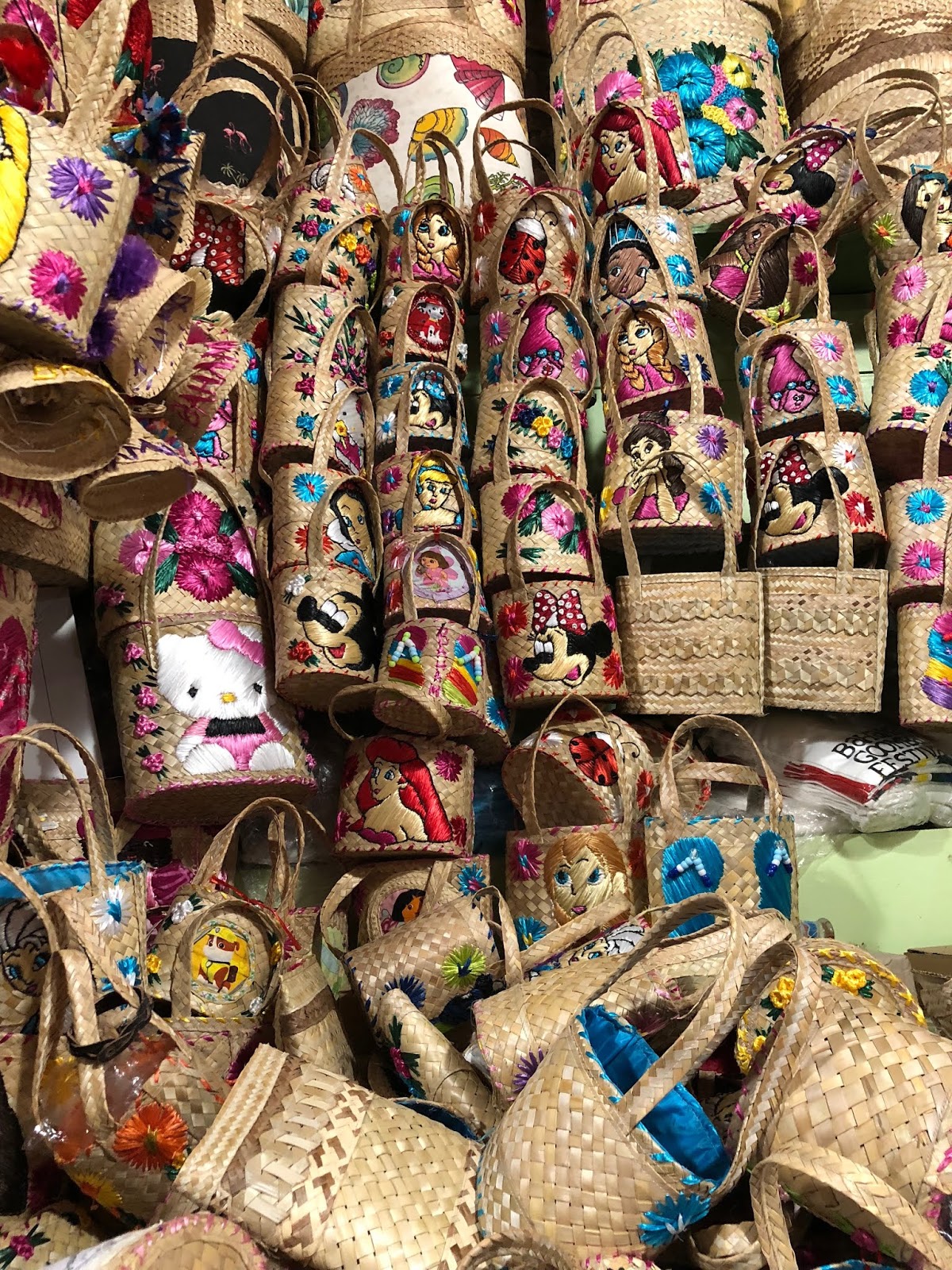
          As I approached the iconic Straw Market of Nassau’s Bay Street, I have to admit my excitement to purchase unique, artisanal items dissipated as I approached row after row of mass produced items, ranging from bags with “Nassau” written in graffiti-style print to plastic ashtrays with artificial Cohiba cigars attached. As I entered the market, I tried to remain positive, but was bombarded by salespeople encouraging me to visit their stall, insisting that I purchase something, as they had been out there all day and had not made a sale. Just as I was about to surrender to the pressure of being an American consumer, not comfortable with bartering or saying “no”, a cruise ship full of tourists enthusiastic to find trinkets arrived. I heard one less enthusiastic cruise ship visitor exclaim, “I’m ready to go back to the boat and watch football!” As the salespeople eagerly made sales, it dawned on me that the Straw Market was geared towards the consumption of cruise ship tourists due to its proximity to the Port Terminal and centralized Bay Street. There was an ATM situated at the foot of the port, eliminating a barrier of entry for American consumers who tend to rely on cards versus cash.


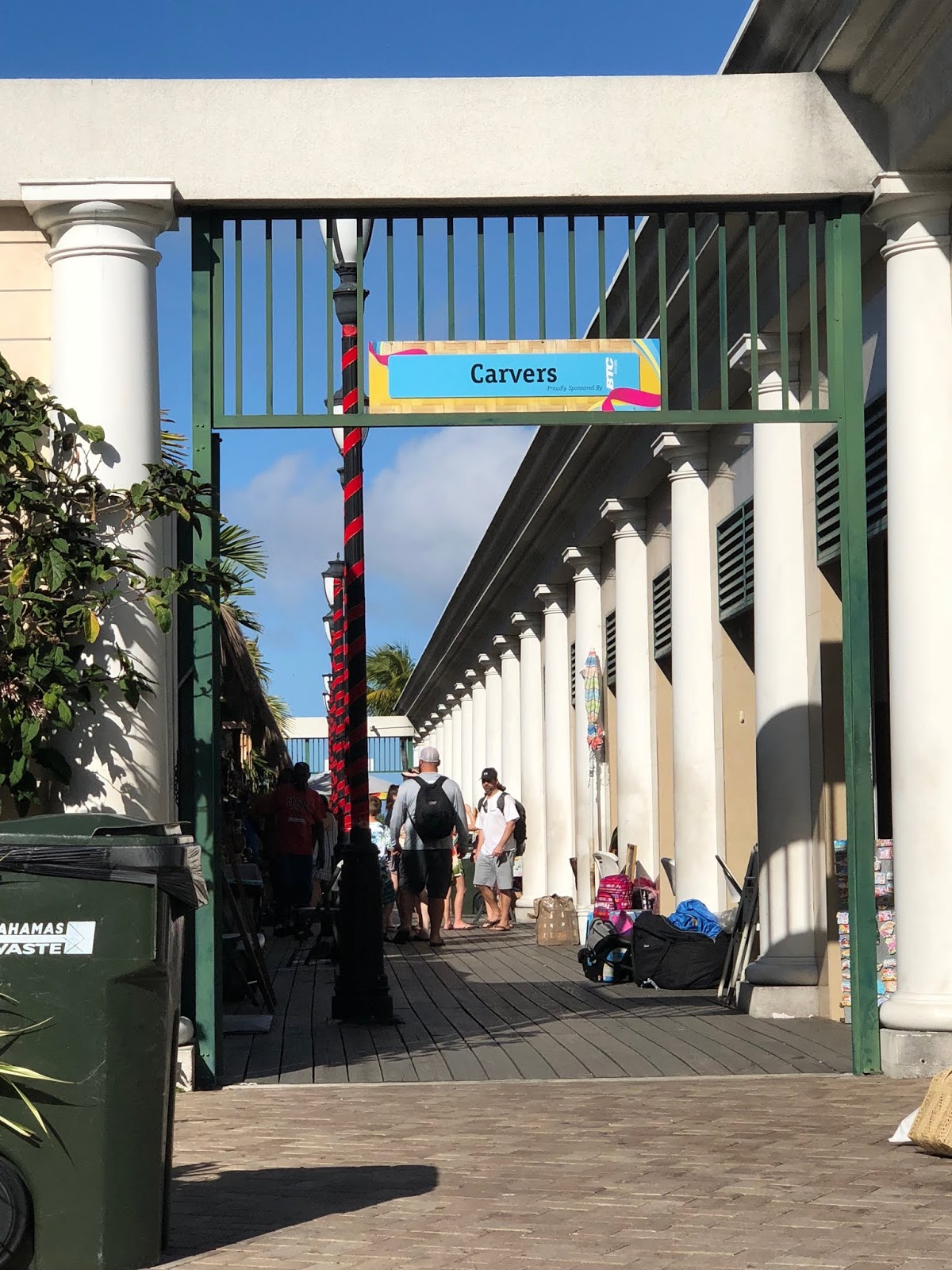
As time progressed, I gained an even better idea of what was unique and what was mass produced, bartering over prices, and forging ahead to the items that I wanted to see. I purchased two beaded necklaces mimicking jade and coral, a gold ring including a pearl similar to those produced by a conch, the star of the Bahamas, a set of multicolor bracelets, a fan and a fannypack that I planned to use at Junkanoo. However, I could not leave the Straw Market without purchasing a genuine straw item similar to the ones that the Caribbean became famous for in the 1940s. I stumbled upon a woman who not only had a plethora of straw items available for purchase, but was in the process of completing a purse in the exact style for which I was looking. I approached her and as she completed my purse, she shared stories about her life on the island, family in Hyattsville, Maryland that was encouraging her to move and excitement for the Junkanoo parade. She also shared how the Straw Market had to be rebuilt in 2001 as a result of a great fire, which explained the abundance of No Smoking signs. I could feel her sense of pride in her background and talent as she handed the finish product to me, which renewed my excitement in visiting the Straw Market. As I exited the market, I noticed a row full of woodcarvers mastering their craft in front of my eyes.


Like much of Nassau, the Straw Market is tailored to tourists’ taste, but there are plenty of stories and unique flair to take advantage of, if you are willing to remain curious.

Friday, January 4, 2019

Pompey Museum of Slavery & Emancipation


Located in the heart of downtown Nassau, the Pompey Museum of Slavery & Emancipation provides a rich telling of the history of slavery within the Bahamas. The historic building that the museum is located within, known as the Vendue House, was built in 1769 and was utilized during the 18th and 19th centuries as a venue for slave auctions. The building became a museum in 1992 and not only chronologically details the history of slavery within the Bahamas, but also delves into the forms of slavery that exist within society today.


When we first entered the museum, we were instantly greeted by the desk attendant. We had seen on the website that the cost of entrance for the museum was $3 but noticed that the sign on the desk stated that the cost was actually $5. We, fortunately, had extra cash on hand and were able to pay the entrance fee. Updating the website to reflect the true pricing would be a very easy fix to an issue, such as this one, that might prohibit or discourage individuals interested in visiting the museum.

As we were trying to figure out where to start in the museum, the desk attendant told us to start on the left-hand side of the room, then go through the center exhibit, and finish with the information on the right-hand side. We walked to the left and started clicking on a large screen panel to read the beginning history of slavery in the Bahamas. Each slide was incredibly dense with information and included several other tabs on the right-hand side and bottom that were just as detailed. Although the information was very interesting, it was difficult to keep track of which tabs we had already selected and the amount of reading was extremely lengthy. Condensing the material on the panels would help to keep readers engaged and organizing the tabs, potentially through color-coding, could better help individuals keep track of which tabs they had already selected. Additionally, adding an interactive portion to the material on either side of the museum beside the panels could help guests learn more about the history of slavery through other mediums.


After we had finished reading the panels and looking through the artifacts on the left-hand side of the room, we approached the center exhibit. We were unsure of where to begin and which order we should read the panels in. In order to alleviate this confusion, having signs to clearly demarcate where to begin and numbering each panel could help guests better navigate this portion of the museum. 


Overall, the Pompey Museum is an excellent place to learn more about the history of slavery within the Bahamas, but a couple of internal improvements could be beneficial to ameliorate the customer experience of the museum.

Cricket Club and Bahamian Culture

One of the major experiences which I found to be really insightful was my experience at the restaurant Cricket Club. Located just west of the downtown area, it was a very local spot which was located right next to a cricket pitch and containing a lot of photographs that documented the history of cricket in the Bahamas. One element of this restaurant that had originally surprised me is that I did not expect it to have been on the site of a former Cricket Club, rather naively, and so that realization made the experience incredibly memorable. 

I have an understanding of how Cricket was popularized throughout the Commonwealth nations, however, I had assumed that the Bahamas would have had a more similar cultural trajectory to that of the United States. This location gave me a lot more perspective related to how the Bahamas have a history of a variety of influences that extend beyond driving on the left. However, what I began to notice about the restaurant was that most locals were there for the restaurant itself and there was nobody on the nearby cricket pitch. For this reason, I asked nearby patrons whether cricket was popular in the Bahamas. The first group I had asked of young guys around their mid-20s actually began laughing and saying that nobody plays cricket anymore. When I began to ask which sports were most popular we heard more about the Miami Heat or the Dolphins. The second group which I had asked also referenced two young Bahamians who were just drafted into the NBA, for the Phoenix Suns and the Sacramento Kings. When I had gotten up to walk through the restaurant I began to notice the age of the photos, which were much older than I had assumed upon my first examination. I saw the capture of important cricket matches taking place in Nassau as well as Bahamian teams which had previously gone on to play in international tournaments.


When reflecting on my experience many of the smaller issues that I had were related to service and the experience with the menu. However, this spot appeared to have so much more potential for tourists to visit if the experience of the location were made more central to the branding of the experience. I originally felt foolish for not anticipating the obvious connection to cricket, however, I now realize this is in part because it is not the most significant attribute conveyed. If I were able to access more of the history surrounding the location I think I would have been able to benefit from the experience rather than construct an understanding of the location by static photographs.

This photo is taken from Fort Charlotte nearby and in the foreground is the Cricket Club, and the cricket pitch. In the background is Arawak Cay as well as Prince George Wharf.

Thursday, January 3, 2019

Fort Fincastle

Offering gorgeous views of Nassau, the city of New Providence island, Fort Fincastle is a part of the Bahamas rich history. Along with the nearby attraction of the Queen’s Staircase, the site dates back to the late seventeen hundreds and attracts many tourists.

While the Fort is full of history and stories just waiting to be told, the tour guides on site may need to improve the way the information is told to tourists. When entering the fort’s lookout tower, one guide was walking around repeating a few facts about the fort itself as well as some locations seen from below. After a few minutes he quickly wrapped up and asked for tips. This left me as a tourist, feeling like I learned little to nothing and even more confused about the site.

Offering more formal tours can be a way to fix this situation. While the Fort itself isn’t large, it holds lots of history that could be told in a more organized way for the tourist to make sense of a story. Additionally a tour could be added to encompass the Queen’s Staircase since their histories are intertwined. This would make the fee you must pay when entering the Fort worth your money as well as leaving tourists with more knowledge of Bahamian culture.

Another place for improvements would be in terms of the gift shop. While the space was small, most of the room was taken up with food items and gifts unrelated to the Fort or Staircase. As the last stop before leaving the attraction for many tourists, this needs to be a place of positive experience. Having unique items that reflected any parts of the site would be a nice remembrance for tourists to take with them to remember the experience. The let down of the gift shop left me with an incomplete feeling after the visit despite any positives that occured. Since the last interaction is so crucial, the gift shop makes a great place for improvements.